

Winemaker
Environmentalist
Outdoor Enthusiast

Alisa Jacobson’s Biography
I set out to make something that felt connected — to the soil, to the coast, to a point where everything converges. Turning Tide Wines is what that looks like.
I started working in winemaking in 1998. By the time I founded Turning Tide in 2018, I had spent twenty years working across four continents and understood the craft at every scale.
At the heart of it is one core belief: the best wine comes from the healthiest land. Our home winery in Santa Ynez Valley is certified organic, and every vineyard I source from is organically farmed or Certified Sustainable. That's my conviction, and my responsibility to the land.
That instinct runs deep. I grew up in California's Sacramento–San Joaquin Delta, picking cherries in my family's orchard, raising livestock through 4-H, running through cornfields and century-old Zinfandel vineyards in Contra Costa County. The land was never abstract to me. It was something you tended, protected, and passed on. I carry that same sense of responsibility into every vintage.
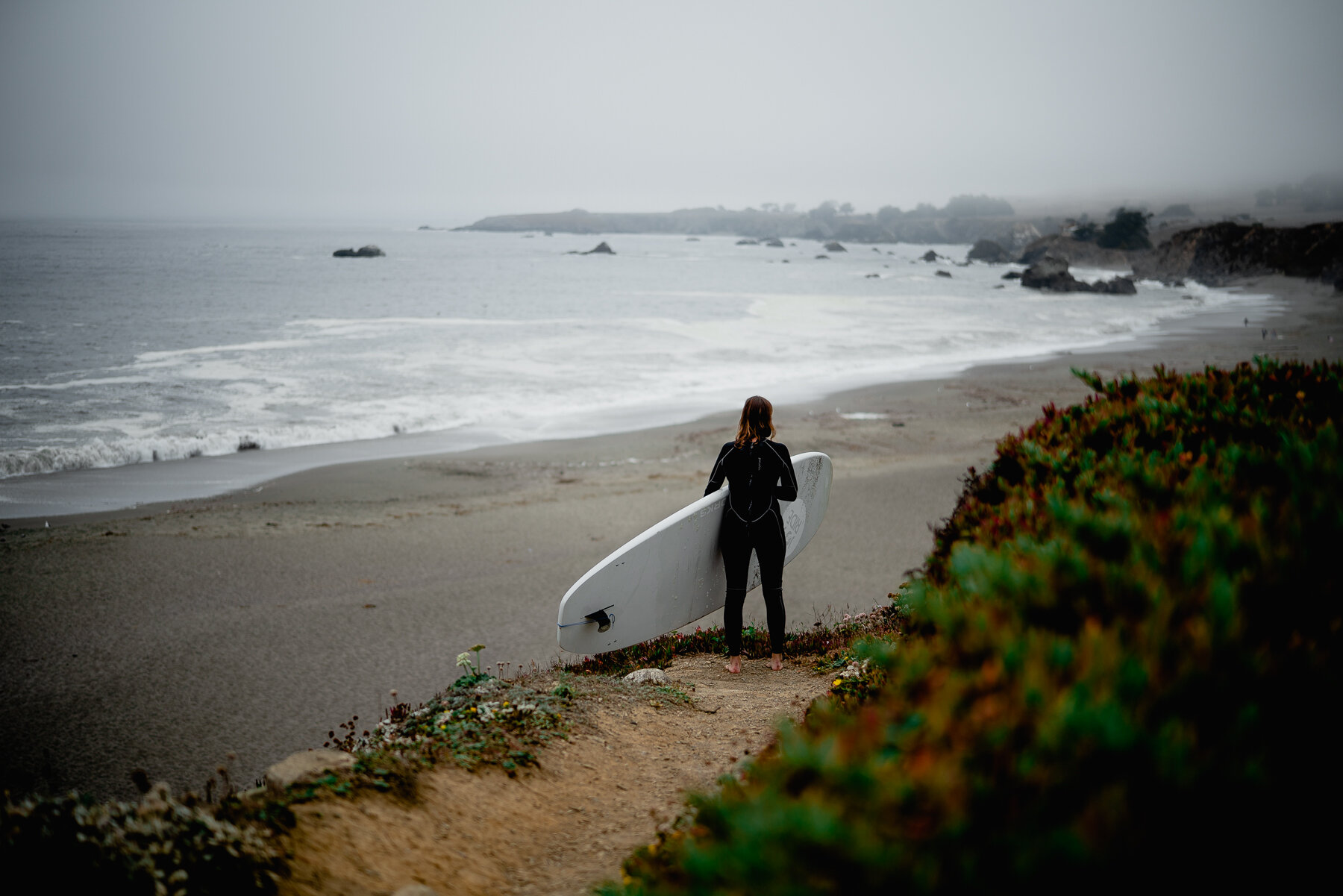
The ocean keeps me grounded in the bigger picture. Out on the water — paddleboarding, diving, fly-fishing — the connections become impossible to ignore: soil, vine, watershed, community. Sustainable winemaking on the Central Coast isn't a trend I'm following. It's how I've always seen the world.
The dandelion on our label holds all of that. Each small flower stemming from a single point — the land, the farmers, the craft, the people who gather around the bottle. Separately, they're just elements. Together, they become something complex and alive. That's wine, at its best. And that's what Turning Tide has always been about.


For AJ, wine is more than what’s in the glass; it’s a shared experience, a story of place, and a reminder that when we nurture the whole ecosystem — from vineyard to community — we can truly turn the tide toward something better.
Winemaking
Turning Tide wines are sourced from vineyards across California's Central Coast AVA — from Santa Barbara County in the Santa Ynez Valley for whites to Paso Robles for Cabernet — each site shaped by the reach of the Pacific. Ocean fog rolls in overnight, cool winds moderate the afternoon heat, and temperatures drop in the evening, giving grapes the slow, extended ripening that builds real complexity. These sites have access to natural water sources and are farmed sustainably or organically, which matters as much to me as anything that happens in the cellar.
Harvesting at naturally lower sugar levels, with good natural acidity intact, produces wines with lower alcohol and a liveliness that carries through every sip. When I use oak in aging, it's to lift and support the wine's expression, never to define it. I use as little sulfur as possible, relying instead on strict winemaking practices that follow CCOF certified organic guidelines — from the vineyard all the way through to bottling. Every yeast and nutrient used in production is non-GMO, organic, and vegan.

"Lower alcohol, zero sugar, restrained oak, and bright natural acidity — wines that feel complete on their own and truly come alive in the glass”
The most exciting moment in winemaking is seeing the true expression of a vineyard appear in the glass — in a bottle that began as grapes years earlier. My style is to highlight, and in some cases gently coax out, the essence of each variety while honoring what makes each site unique. Every bottle should be a reflection of where it came from.
That pursuit of expression is also a pursuit of balance. Lower alcohol, restrained oak, and bright natural acidity work together to create wines that feel complete — wines that satisfy on their own but truly come alive at the table. As a women-owned winery committed to organic and sustainable winemaking, my goal in every vintage is a wine that is expressive, authentic, and deeply connected — to the vineyard, the fruit, and the craft behind it.
Activism Work

Coming to Grips with the
Impact of Smoke on Wine
Alisa Jacobson is interviewed by the winewrite.com on the effects the wildfires of 2020 had on the west coast. Read about her work with the West Coast Smoke Exposure Task Force and their work after the dust has settled.

Crop insurance gets new tools for wine smoke taint
West Coast Smoke Exposure Task Force, started by Alisa Jacobson, of Joel Gott Wines last year, is a group of researchers and winemakers. It is aggregating smoke-taint testing protocols for taking grape berry and microfermentation samples developed by the Australian Wine Research Institute for U.S. growers and vintners.

Alisa Jacobson featured in the Sommelier's Journal
The fires that ripped across the west coast devastated millions of acres in in California, Oregon and beyond. Our Alisa Jacobson, who serves as winemaker for Joel Gott Wines and Turning Tide Wines, is overseeing the West Coast Smoke Exposure Task Force’s research committee.
Read more on the sommjournal.com (page 72-73)

The West Coast Smoke
Exposure Task Force
A smoke exposure task force working with wine industry stakeholders from California, Oregon, and Washington along with university professors to research wildfire issues affecting grape production around the globe.

Porto Protocol
Turning Tide is a member of The Porto Protocol, a non-profit foundation formed by Taylor’s Port, helping create and foster a network of global like-minded vintners who are dedicated to slowing and reversing climate change, while reducing their carbon footprint.

Wine To Water
Wine To Water is making an incredible impact and water is just the beginning. Around the world we see health, education, agriculture, economic development and women’s empowerment flowing from clean water. The ripple effects are truly life giving.

When Smoke Gets in Your Wine
Growers, vintners, and scientists are scrambling to protect California’s prized Napa Cab from the aftertaste of wildfires.